Banner idestinations

Tips to Get in Bali For You to Know

Tips to Get in Bali For You to KnowTips to Get in Bali For You to Know ---With increasing number of direct flights from many parts of the world, getting to Bali is easy. Flights from Jakarta to Bali take about 1.5 hours, from Singapore and Perth (Australia) around 2.5 and 3 hours, from Hong Kong about 4.5 hours, and from Sydney/Melbourne about 5.5 to 6 hours on many national and international carriers.

Just make sure that you look for "Denpasar (DPS)" instead of "Bali" in airline time tables. Denpasar is the capital of Bali. While the name of its international airport is Ngurah Rai.

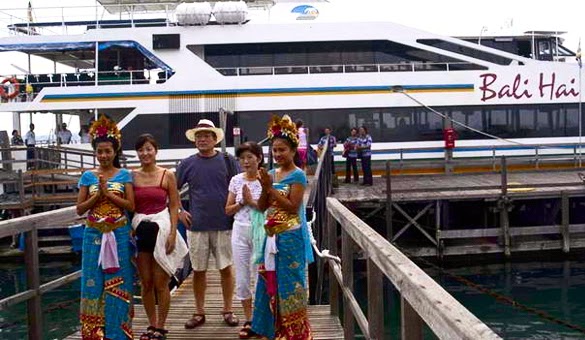
Another means to reach the island is by ferry from Banyuwangi, located at the most eastern tip of East Java. It takes 30 to 45 minutes crossing from Banyuwangi to Ketapang on Bali. From Bali, you can also continue further by ferry to the island of Lombok, in West Nusa Tenggara . Take the ferry at Padang Bay with transit at Lembar seaport for a total of 4 hours journey.

Bali has many travel agents to assist you with your holiday plans.
Tips to Get in Bali For You to Know

Tips Getting Around Bali

Remember to "hoot" your horn when going around curves on mountainous roads as it is very common to drive in the middle of the road here. There are a lot of one way roads in Bali. If you miss your turn off you may have to drive quite a distance before being able to turn back. Be alert!

We highly recommend you fill up at any of the numerous government owned petrol stations. In more remote areas at stalls by the side of the road sell bottles of clear liquid. The quality may not be as good as at the petrol station and could cause damage to the rental car.
Readmore

Getting Around and Places To Stay in Bali

Getting Around and Places To Stay in BaliGetting Around and Places To Stay in Bali ---There are many modes of transport to help you get around in Bali. A variety of excellent half day, full day and overnight tour packages are available from your hotel desk or any of the numerous travel agents and tour operators which abound in Bali. Or you can find a car and driver who will also act as your guide.

Whilst walking about, you will be barraged with constant questions of "Transport, transport?". Competition is tight and many drivers know several languages. Tell the driver your desired route and negotiate a fee.

An important virtue to have while on the road in Bali is patience! Although the road system in the heavily populated areas is quite reasonable (condition wise) in comparison to other developing countries, it can be heavily congested at peak periods. Ceremonial processions often take up the entire road so if you're caught behind a procession, enjoy the colorful experience.

Places To Stay in Bali

Getting Around and Places To Stay in BaliMany beautiful resorts offer fine lodgings. Most of the starred hotels are located near the beach. Otherwise, they usually have their own private spots at certain beaches. You can find them easily at popular spots like Kuta or Sanur.

If you're in a serene highland like Ubud, forget starred hotels. You're there to embrace the atmosphere. Just pick one of the small lodgings lining up the streets. And even the smallest one's ready to make you feel welcome.

During the 2007 Ubud Readers and Writers Festival, a man in a wheelchair checked in at a small inn on Monkey Forest. He had some difficulties in navigating through the stairs to his bungalow. He then left for the Festival. When he returned at night, the owner had already paved an ascending lane to his bungalow. That's a typical Balinese hospitality.

When you've already picked a certain destination in Bali, just check out our Travel Directory. See what options are near.
Readmore

Bali The Island of The Gods

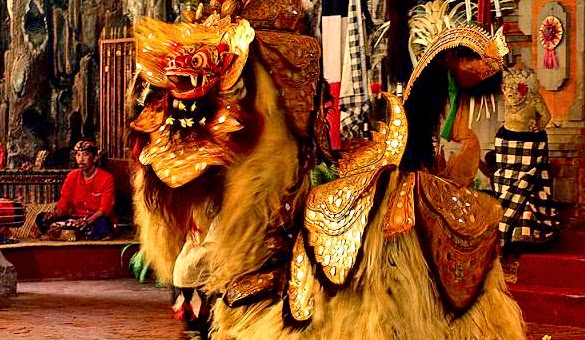
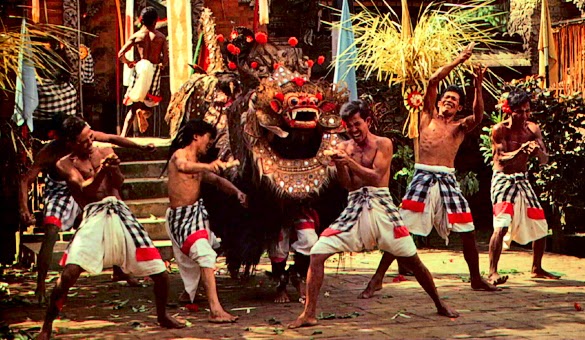
Bali The Island of the GodsBali The Island of the Gods ---Bali is magical. As probably the most famous island in Indonesia, Bali blends spectacular mountain scenery and beautiful beaches with warm and friendly people, a vibrant culture and out of this world resorts.

Travel and Leisure Magazine has awarded Bali the World’s Best Island in 2009, while the Lonely Planet’s Best of Travel 2010 ranked Bali second place among the world’s Top Regions.

Also known as the Land of the Gods, Bali appeals through its sheer natural beauty of looming volcanoes and lush terraced rice fields that exude peace and serenity. Bali enchants with its dramatic dances and colorful ceremonies, its arts and crafts, to its luxurious beach resorts and exciting night life.

For this exotic island has much to offer, from inspirational spirituality to fine dining and meeting experiences, from world class surfing and diving to exhilarating treks in the wild. And everywhere you will find intricately carved temples.
Bali The Island of the GodsFor, the Balinese, who embrace the Hindu religion, are a most devout people where a large part of their lives is dedicated to rites and ceremonies aimed at maintaining harmony in this world. Indeed, this relatively small island holds many surprises.

This is a miraculous island indeed, for after decades of popularity, Bali continues to amaze both local and international visitors alike. Here gather a variety of visitors from around the globe: from those who come to surf the waves of Kuta, Uluwatu and Dreamland, to others who love the panoramic beauty of mountains and lakes at Batur, Kintamani, or Lake Beratan at Bedugul, to those who merely love shopping or spend endless days on the beach.
Readmore

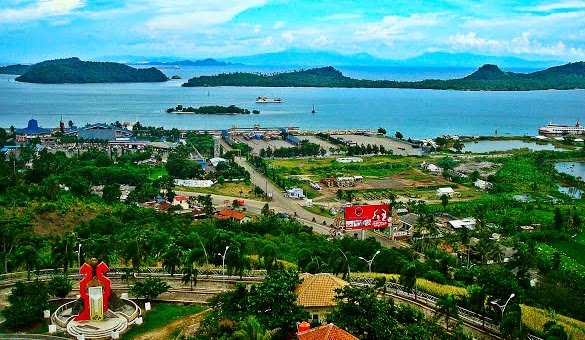
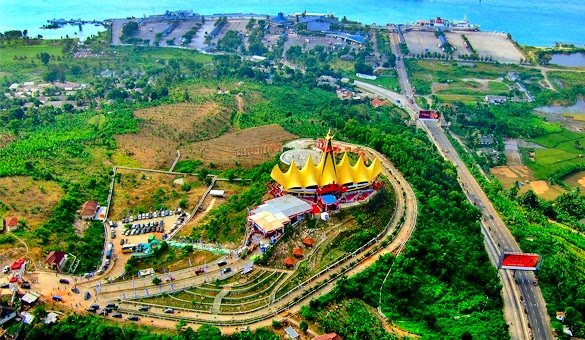
Place of Southerly Winds Named Lampung

Place of Southerly Winds Named LampungPlace of Southerly Winds Named Lampung ---Ancient Chinese travel chronicles refer to a place in the most southerly part of Sumatra called “Lampung” or “place of southerly winds”. This shows that Lampung has been there for quite a while. The province is generally flat with the highest mountains of Gunung Pesagi, Tanggamas, Seminiung, Sekincau and Raya all being dormant volcanoes.

Bandar Lampung, the Provincial capital, was formerly two separate towns, Tanjungkarang and the port of Teluk Betung, which after the infamous eruption of Krakatau were both completely covered in volcanic ash. In the course of development, however this town have merged together to become one single city.

The History of Lampung

Some relics show that Lampung was once a part of Sriwijaya kingdom until 11th century. After that, Lampung became a part of Melayu kingdom. Some megalithic remains in Pugungraharjo are believed to be more than 1,000 years old. This shows some influences of Hinduism and Buddhism.

The fertile land of Lampung is famous for yielding pepper. No wonder the sultanate of Banten was anxious to get ahold of this area. Dutch East India Company managed to claim it until late 17th century. Dutch began transmigration to this area to overcome densely populated areas in Java. Most of the migrants.
Place of Southerly Winds Named Lampung

Entry Points to Lampung

Domestic airlines have daily flights from Jakarta. Rajabasa bus terminal is one of the busiest in Sumatra, with a constant flow of departures. The trip from Jakarta takes eight hours, which includes crossing Sunda Strait between Merak in java and Bakaheuni Lampung by ferry. Three trains run from Palembang daily.

Characteristic of People and Culture in Lampung

Lampung has become a melting pot because of the people who have migrated there over the years. Some originated from Java, most have never ever set foot to Javanese land, content to be in Lampung.

Lampung Various Culinary

Influenced by neighboring provinces, Lampung people enjoy cuisine of all sorts. Most notably West Sumatran spicy food, that can be found almost anywhere. Palembang style food are also served in many places. Try sayur asam--sour vegetable soup, one of the specialties here.
Readmore

Visiting Bengkulu to See The Largest Flower in The World

Visiting Bengkulu to See The Largest Flower in The WorldVisiting Bengkulu to See The Largest Flower in The World ---The capital of Bengkulu Province is the coastal city formerly known as Bencoolen. It was the site of Sir Stamford Raffles first entrry into Indonesia and there are still remains of British influence in the area. The primary crops of the area are pepper, coffee, nutmeg and sugar cane.

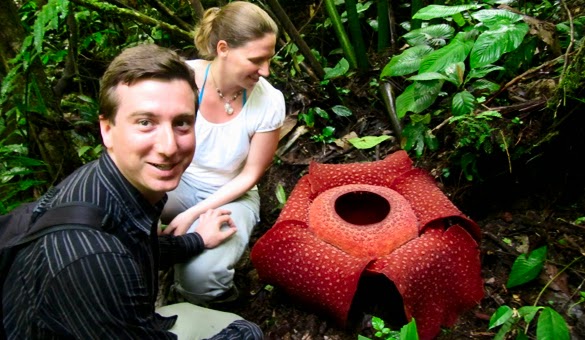
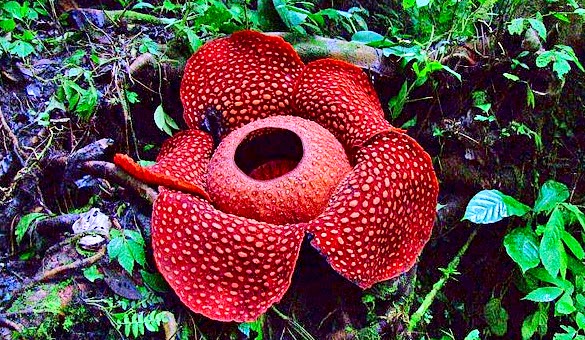
The most fascinating nature charms are the exotic Rafflesia Arnoldi. Dubbed the largest flower in the world, it's actually a parasite luring insects into it by emitting rotten odor. Most inhabitants here are Malay and the culture and habits are somewhat similar to neighboring provinces.
Visiting Bengkulu to See The Largest Flower in The World

The History of Bengkulu

Apparently not much is known about Bengkulu's past, save from the fact that it used to consist of small kingdoms. It developed its own script called ka-ga-nga. Majapahit seemed to take Bengkulu into its wings but after this mighty kingdom fell, Bengkulu was left to its own devices until the British came and take over. The British wanted to monopolize the pepper, grown abundant here, but constant attacks of malaria and boredom made them think that Bencoolen, like they preferred to call it, was not that promising.

When Sir Thomas Stamford Raffles arrived in 1818 as the British ruler, he somehow managed to turn Bengkulu into a success. He made the best of pepper trade, and he also make them grow coffee, nutmeg and sugar cane here. Bengkulu is also well-known as the exile place of Indonesia's first president, Sukarno, in 1938-1941.
Visiting Bengkulu to See The Largest Flower in The World

Entry Points to Bengkulu

Bengkulu Province is easily accessible by land, air and sea transportation. You can catch regular buses directly from Medan, Padang or Jakarta. Flight arrives there times a day. Domestic ships from Jakarta, Padang and Medan stop by in Baai Harbor, Bengkulu.

Bengkulu Various Cuisines

Like other provinces in Indonesia, Bengkulu has its own specific cuisine for which it is renowned, among which are pendap, gulai tempoyak, and bagar kambing. Pendap is a tasty sidedish wrapped in taro leaf, containing fresh fish, cooked in a bed of spices, consisting of garlic, galangale (a root resembling ginger, known in Indonesia as kencur) and chilli paste, then mixed with rasped young coconut meat. Wrapped in taro leaf, pendap is boiled for no less than 8 hours. Pendap is best eaten with steaming hot rice.
Visiting Bengkulu to See The Largest Flower in The World
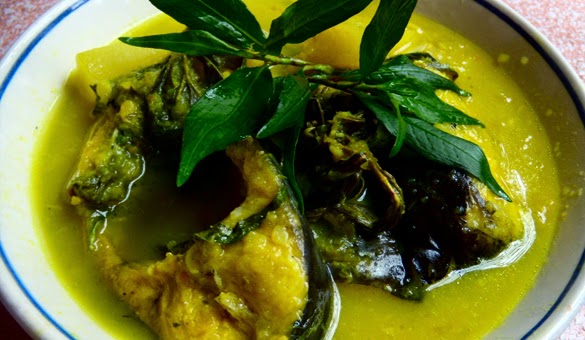
While gulai tempoyak, or more familiarly called tempoyak is a dish made of fermented fresh durians, then cooked with chilli paste and salt. Although tempoyak is also known in other parts of Indonesia, here in Bengkulu, tempoyak is mixed with shrimp, unlike fish used in other provinces. Since tempoyak has a strong smell, it is often not served as a sidedish but used as ingredient in other dishes.

Bagar kambing is goat meat, cooked in an array of spices including coriander, nutmeg, pepper, tamarind, galangale, garlic, chalots, chilli paste and fried rasped coconut. There is also the Bagar Hiu or shark’s meat that is cooked with the same ingredients and follows the same process.
Readmore

Enjoying Marine Tourism in Bangka Belitung Island

Enjoying Marine Tourism in Bangka Belitung IslandEnjoying Marine Tourism in Bangka Belitung Island ---Bangka Belitung Island is a province with archipelago nomenclature. Consisting of approximately 81,725,14 km sq. land with its 16,424,14 km sq and wide territorial water is 65,301 km sq, 20% among others represent territorial water of rock. Consisting of 2 big islands, Bangka Island and also 254 islets surrounding them with coastal length is 1,200 km sq, divided in 7 sub-provinces.

With excellence of comparability and supported by regional ecosystem of archipelago, coastal area and the island with the other, Bangka Belitung present marine tourism (diving, scuba, snorkeling, fishing and sailing). After tin was found here in 1710, Bangka (derived from the local word wangka meaning tin) got his wealth and fame from this metal. These days tin is still mined but not as much as before.

To access Bangka Belitung Island, you can Get a flight from Soekarno-Hatta Airport. Also, you can visit Bangka Belitung by boat from Palembang City.
Enjoying Marine Tourism in Bangka Belitung Island

People and Culture in Vangka Belitung Island

The Chinese make up at least 20% of the population of Babel. The majority of the Chinese are direct descendants of the coolies who worked the tin mines. The oldest temple is in Batu Rusa, a village along the road from Pangkalpinang to Sungai Liat.

A beautifully decorated temple is found near Tayu in the north of Bangka Island. There are approximately 55 Chinese or Buddhist temples on Bangka alone that are still in use.
Enjoying Marine Tourism in Bangka Belitung Island
Due to its proximity to sea, sea food has become a favorite. Chinese influence also can be seen in the dishes that mainly use Chinese spices. While you're here try gebung, the local dialect for chicken fish. Its firm and tasty flesh will delight your senses.
Readmore

Historical Objects of Melayu Ancient Kingdom in Jambi

Historical Objects of Melayu Ancient Kingdom in JambiHistorical Objects of Melayu Ancient Kingdom in Jambi ---Jambi province with total area of about 5,343,700 hectars consists of 9 regencies and one municipality. The Topography of Jambi Province generally varies from low land areas in the east and Kerinci regency. The natural resources with wealthy biodiversity are represented in four national parks such as Kerinci Seblat National Park, Berbak National Park, Bukit Dua Belas National Park, Bukit Tiga Puluh National Park. Each of the national park has its own characteristic and typical biodiversity.

The History of Jambi

It was once the center of Melayu ancient kingdom. It gained its influence some time in 7th century but rather overshadowed by the large neighbor kingdom that time, namely Sriwijaya. I Tsing once spent some time in Melayu and from his record it can be deduced that this area was called Chan Pi by the Chinese then. Melayu then became a subject of Sriwijaya and then Sriwijaya fell, Majapahit took over this kingdom. Then Minangkabau people of West Sumatra claimed this area after the fall of Majapahit.

In 17th century, the Dutch East India Company created an alliance with Sultan Muhammed Nakhruddin. The Dutch then monopolized pepper trade in this area. Later on 1901, Dutch East India Company moved its place to Palembang in South Sumatra and Jambi was free of its influences then.
Historical Objests of Melayu Ancient Kingdom in Jambi

Entry Points to Jambi

There are 6 daily flights departing and arriving Jambi. It will take 60 minutes flight from Jakarta, 15 minutes from Palembang and 60 minutes from Batam Island, as well as from Singapore. Travelling by boat or ferry is also easy, accessing Jambi from Batam only 5 hours and 7 hours from Malaysia. To see and experience land traveling, it's 6 hours from Palembang, 8 hours from Padang, 10 hours from Bengkulu.

Characteristic of People and Culture in Jambi

Dominated by Malay race, this place also houses a tribe that prefers to dwell in the forest. Sometimes called Kubu, Anak Dalam (Children of the Forest) or more appealingly Orang Rimba (People of the Forest), some still maintain their age old belief--animism and maintain no contact with the outsiders.

Some Orang Rimba have decided to merge with locals and leave their old customs. Forcing Orang Rimba to leave their way of life and mingle with modern society is not always the good solution, for it will only remove a tribe of its wealth of knowledge and age-old ways. Some educational institutions assign teachers to join the nomads so they'll be able to teach the young generation how to read, write and count.
Historical Objests of Melayu Ancient Kingdom in Jambi

Jambi Various Cuisines

Jambi has similar cuisine like in South Sumatra. It is also the right place to enjoy some traditional delicacies such as fried pineapple (nanas goreng), roasted corn (jagung bakar) and the like. And of course, Western Sumatra cuisine--nasi padang--can easily be found anywhere. Most of the food are spicy so be sure to ask around for less spicy ones if you prefer so.
Readmore

Bukit Barisan Mountain Range in West Sumatra

Bukit Barisan Mountain Range in West SumatraBukit Barisan Mountain Range in West Sumatra ---Much of its highland is formed by the Bukit Barisan Mountain range; virgin jungles inhabited by elephants, tigers, leopards and rhinos. Minang people have spicy-hot dishes and ancient matriarchal customs. The women own property and the men leave home to seek their fame and fortune.
Bukit Barisan Mountain Range in West SumatraTraveling is considered a mark of success, Padang restaurants are found in all major towns across the nation. The people are hospitable and eloquent. They primarily speak bahasa Minang, with poetic style of speech.
Bukit Barisan Mountain Range in West Sumatra

Entry Points to North Sumatra

Getting There : Padang's Tabing Airport is the main gateway to West Sumatra and is serviced by Merpati Nusantara Airlines. PELNI's ship "Kerinci" sails every two weeks for Jakarta from Teluk Bayur Harbour. Smaller vessels from Muara Harbour sail to small towns along the entire west coast of Sumtra.
Bukit Barisan Mountain Range in West SumatraRegular bus services run between Padang, Bukittinggi and other major cities of Sumatra, as well as via the trans-Sumatra Highway to Jakarta. West Sumatra days are filled with colorful ceremonies and festivals. Legend of the Minangkabau is descendants of the youngest son of Alexander the Great, King Maharjo Dirajo.

During the early 19th century, the area was disrupted by wars between the followers of the traditional Islam or Padris, and those adhering to the traditional law (Adat).
Readmore

Visiting Ampera Bridge in Palembang City South Sumatra

Visiting Ampera Bridge in Palembang City South SumatraVisiting Ampera Bridge in Palembang City South Sumatra ---One of the greatest kingdoms in Indonesian history, the Buddhist Empire of Sriwijaya prospered along the banks of Musi River in South Sumatra over a thousand years ago. Located on the southern-most rim of the South China Sea, close to the one of the world’s busiest shipping lanes linking the Far East with Europe, the Region’s historical background is rich and colorful. Sriwijaya kingdom practiced a bustling and productive trade with ancient China during its golden years.

Stretching from the foothills of the mighty Bukit Barisan mountain range, this province is relatively flat but very fertile, with numerous rivers cutting across the landscape and meandering their ways to the sea. Coffee and tea plantations are scattered across the province, but South Sumatra’s enormous wealth comes from oil, natural gas, coal, tin and quartz reserves.
Visiting Ampera Bridge in Palembang City South Sumatra

The History of South Sumatra

In 672, the Chinese scholar, I Tsing, recorded that a thousand monks and scholars could be seen translating and studying Sanskrit in Palembang, the capital of South Sumatra. This shows that more than a thousand years ago, Palembang under the reign of Sriwijaya kingdom was prosperous and rich in culture. Many relics and remnants of this mighty kingdom can still be found in this area.

Entry Points to South Sumatra

Getting There: Many domestic Airlines serve to Palembang. Garuda Indonesia airlines serves flight from Osaka, Tokyo, Jeddah, Riyadh, Guangzhou, Shanghai, Singapore and Perth as well as major cities in Indonesia to Palembang. Air Conditioned busses from Java and Sumatra are also available.

Characteristic of People and Culture in South Sumatra

Palembang people are known for their frankness and gregarious manner. They can create works of art, beautiful and exquisite with their patience and strength. Songket, made of silk combined with gold thread, will fascinate traditional cloth collectors because of its rich designs and elegance. It’s also a great keepsake to buy, although the price of this first grade hand-woven songket might be quite expensive.
Visiting Ampera Bridge in Palembang City South SumatraPalembang is also famous for its wood carving motifs, influenced by Chinese and Buddhist designs. The carvings are dominated by decorations in the form of jasmine flower and lotus seen in the furniture and lacquers.

South Sumatra Various Cuisines

Palembang’s famous fruits are pineapple and duku (Lansium domisticum). The taste of Palembang pineapple is fresh and rather tangy, while duku tastes sweet and sometimes bland. Palembang also offers unique, tasty dish, mostly made of fish. One of them welknown as Pempek Palembang.
Readmore

Visiting Center of Industry Batam Island in Riau Archipelago

Visiting Center of Industry Batam Island in Riau ArchipelagoVisiting Center of Industry Batam Island in Riau Archipelago ---From Sriwijaya era until the 16th century, Riau was a part of greater Malay kingdoms or sultanates, in the heart of what is often called the 'Malay World', which stretches from eastern Sumatra to Borneo. The Malay-related Orang Laut tribes inhabited the islands and formed the backbone of most Malay kingdoms from Sriwijaya to the Sultanate of Johor for the control of trade routes going through the straits. After the fall of Melaka in 1511, Riau islands became the center of political power of the mighty Sultanate of Johor or Johor - Riau, based on Bintan island, and were considered the center of Malay culture.

But history changed the fate of Riau as a political, cultural or economic center when European powers struggled to control the regional trade routes and took advantage of political weaknesses within the sultanate. Singapore Island, that had been for centuries part of the same greater Malay kingdoms and sultanates, and under direct control of Sultan of Johor, came under British control. The creation of a European-controlled territory in Johor-Riau heart natural boundaries broke the sultanate into two parts, destroying the cultural and political unity that had existed for centuries. The Anglo-Dutch treaty of 1824 consolidated this separation, with the British controlling all territories north of the Singapore Strait and Dutch controlling territories from Riau to Java.
Visiting Center of Industry Batam Island in Riau ArchipelagoAfter the European powers withdrew from the region, the new independent governments had to reorganize and find balance after inheriting 400 years of colonial boundaries. Before finding their current status, Indonesia, Malaysia, Singapore, Brunei and Borneo territories struggled and even came into military conflict against each other, and Riau islands once again found themselves in the middle of regional struggle. But the once strong cultural unity of the region with Riau never returned, and the line drawn by the British in 1819 remained, this time marking the divide between three new countries as of 1965: Singapore, the Malaysian federation in the north and Indonesia in the south. These new countries, however, recreated unity in Riau world for the first time after 150 years with the creation of the Sijori Growth Triangle.

But while bringing back some economical wealth to Riau, the Sijori Growth Triangle somewhat broke the cultural unity within the islands. With Batam island receiving most of the industrial investments and dramatically developing into a regional industrial center, it attracted hundred of thousands of non-Malay Indonesian migrants, changing forever the demographic balance in the archipelago. Today the name of Riau merely refers to this administrative region of Indonesia, a free trade zone heavily supported by Indonesian, Singaporean and international investments.
Visiting Center of Industry Batam Island in Riau Archipelago

Entry Points to Riau Archipelago

Riau Island can easily be reached by air or sea from Jakarta and Pekanbaru directly. Batam and Bintan have intrnational shiplines and flight. It is only 45 minutes away from Singapore by ferry.

Charakteristic of People and Culture in Riau Archipelago

Malay people who inhabit Riau Islands are renowned for their hospitality and warm welcome. However due to the economical and opportunity increases in certain islands, many people try to seek their fortune here thus creating Riau Islands as melting pot for various ethnic groups and races. How about cuisines?
There are Various Cuisines in Riau Archipelago. Renowned for its freshl ingredients and Malay-influenced cuisine, Riau Islands offer fabulous places to eat for sea food lovers.
Readmore

Potential Objects of Tourism in Riau Archipelago

Potential Objects of Tourism in Riau ArchipelagoPotential Objects of Tourism in Riau Archipelago ---Riau Archipelago with Tanjung Pinang as the capital is blessed with a lot potential tourism objects, beautiful beaches and cultural attractions.

Its waters are the backyard of native seafaring nomads who fish and trade for a living. Their traditional wooden sailing craft,s called 'pinisi' still manage to pass the forested channels of these islands, along with other indigenous craft,s fishing vessels and cargo ships. Tanjung Pinang lies on the largest island of Bintan archipelago. Once known as Riau, it was the heart of an ancient Malay kingdom. Today, Bintan is the latest hot spot of development in Indonesia's surging economy.

A master plan is underway to turn it into a major tourist destination. Barely an hour away from Singapore by ferry, tourist accommodation begins to take advantage from its strategic location. It consists of Riau Archipelago, Natuna Islands and Anambas Archipelago. Originally part of Riau Province, Riau Archipelago was split off as a separate Province in July 2004 with Tanjung Pinang as its capital. Anambas Archipelago, located between mainland Malaysia and Borneo were attached to the new province. By population, the most important islands in this area are are Bintan, Batam and Karimun. Size wise, however, the sparsely populated Natuna Islands are larger.
Potential Objects of Tourism in Riau Archipelago
Riau Archipelago with its thousands of island has plenty of scenic beaches and diving spots, among them Trikora on Bintan and Pasir Panjang on Rupat Island. The first is about 50 kilometers south of Tanjung Pinang on the eastern side of the island. Pasir Panjang, on the northern side of Rupat facing to Malacca Strait has natural beaches and they are also found on Terkulai and Soreh islands, about an hour's distance by boat from Tanjung Pinang. One of the most popular beaches is Nongsa on Batam Island. From here one can see the Singapore skyline.

Batam is one of the 3,000 islands, which make up the Riau Archipelago and is closest to Singapore, which is only 20 km away or twenty minutes by air-conditioned ferry. It has a rapid-growing population of around 100.000. As the island develops into a major industrial and tourist area, it attracts an ever-increasing population from other Indonesian islands who see Batam as a haven of opportunity. Once almost uninhabited, save for a few scattered fishing communities, Batam's history took a sharp turn beginning 1969, when it became support base for the State-owned 'Pertamina oil company' and its offshore oil exploration. In 1971 a presidential decree designated it as an industrial area and in 1975 the Batam Authority was formed. In 1978 Batam was established as a bonded area.
Potential Objects of Tourism in Riau Archipelago
In addition to the oil support industries of Batu Ampar and a fast growing electronics industry, Batam now attracts increasing numbers of tourists. Many come from Singapore for a short holiday with friends and family, duty-free shopping and great seafood. The visitors to Singapore hope over for a day or weekend trip.

International standard hotels and numerous economy establishments cater to the expanding demand for accommodation. Business, as they say, is booming. An island two-thirds the size of Singapore, Batam progresses by leaps and bounds. Where virgin jungle once stood are now whole new towns, mosques, churches, temples and supermarkets, soon to be followed by reservoirs with enough water to supply a population of 800,000 and for industrial use, an airport-to become an international gateway ,a fine telecommunication system, well equipped industrial parks and the beginnings of a large new urban center.
Readmore

Visiting Pekanbaru City in Riau

Visiting Pekanbaru City in RiauVisiting Pekanbaru City in Riau ---Riau, which includes a large part of East Sumatra, is homeland to Malays and the source of Indonesians Malay-based national language. The first book of Malay grammar, called Bustanul Katibin, was written and published here in 1857.

Pekanbaru became the provincial capital in 1959, taking over from the former capital of Tanjungpinang on the Island of Bintan. About 160 kms upstream on the Siak River you can find a number of buildings in the traditional style. Among them are Balai Dang Merdu, Balai Adat and Taman Budaya Riau, or Riau Cultural Park.

The History of Riau

Riau Islands were ruled by Malay kingdoms in the 16th century. The kings found it difficult to maintain their power because aside from fighting sea pirates, they also had to fend off attacks from Portuguese, Dutch and English who were keen in controlling this southern entrance of the Strait of Malacca--a strategic place for trade with China and India back then.

Oil was found near Pekanbaru, the capital of Riau, before World War 2. The first oil well was drilled in Minas, about 10-15 kms away from Pekanbaru. To this day, oil has become one of major sources of wealth in Riau Province.
Visiting Pekanbaru City in Riau

Entry Points to Riau

Simpang Tiga Airport is a busy visa free entry point. Pelangi flies to Kuala Lumpur and Silk Air flies to Singapore. Domestic airlines direct flights are available from Jakarta as well as from Medan and Batam. There are frequent departures from the bus station. Agencies all around town sell tickets for the boats to Batam.

Characteristic of People and Culture in Riau

The people inhabited Riau provinces are mostly Malays. They are known for their geniality, warmth and affection, also diverse styles of language. There are several protected tribes too in Riau province, most famous perhaps Sakai tribe, that still lives and thrives on the woods.
Visiting Pekanbaru City in Riau

Riau Various Cuisines

Traditional Malay cuisine is normally spicy, however you can always find other types of food here. Most famous perhaps for its kare--some kind of curry--based dishes, Malay dishes offer fabulous recipes made of sea food ingredients. Due to its proximity to neighboring provinces, Riau also boasts collection of Western Sumatra and North Sumatra dishes. Western food and fast food are available virtually everywhere so tourists without strong stomachs will be able to get their fills here.
Readmore

Exploring Spectacular Natural Beauty in North Sumatra

Exploring Spectacular Natural Beauty in North SumatraExploring Spectacular Natural Beauty in North Sumatra ---Home to a diverse array of cultures and a fascinating kaleidescope of Indonesian life, the region of North Sumatra has many wonders to explore. North Sumatra’s spectacular natural beauty spreads from the magnificent Lake Toba, the biggest lake in Southeast Asia, to the jungle of Bukit Lawang which organgutans make their home. The natural and cultural wonders here make this is a region to come and have a true adventure.

The landscape here has been shaped by thousands of years of volcanic activity. From the incredible Lake Toba which was formed around 75,000 years ago in one of the most fierce volcanic eruptions ever known to the still smouldering Mt Sibayak, volcanoes dominate the landscape everywhere. North Sumatra is home to rare and exotic wildlife. Discover exceptional and unique species like the orangutans, the white-handed gibbon, and 17 types of bird. For nature lovers, the extraordinary ecosystems which exist here are well worth a visit.

The largest city in this region, Medan, is a thriving metropolis, and one of the biggest cities in Indonesia. The population of the city is diverse, representing virtually every ethnicity in Indonesia. As one of the most important economic hubs in the country, Medan is also a place to do business with a number of oil and plantation export companies operating here and in the surrounding region.

Whether you’re after a jungle adventure, a relaxing holiday in pristine natural surrounds or an authentic experience of native Batak culture, this is a region which has it all. North Sumatra is a treasure chest of culture and tradition waiting to be explored, with ancient graves of Batak kings, unique dances and ceremonies plus beautiful arts and crafts.
Exploring Spectacular Natural Beauty in North Sumatra

Entry Points to North Sumatra

The main airport in this region is Polonia Airport, Medan. There are daily flights between Medan and most major cities in Indonesia. Airlines that fly to Medan are: Garuda Indonesia, Lion Air, Air Asia, Batavia Air, Sriwijaya Air, Riau Airlines, Mandala Airlines, Merpati, Kartika Airlines. International flights also go directly to Medan. Air Asia has flights from Thailand and Malaysia to Medan.

Lion Air has flights from Singapore, Malaysia and Vietnam to Medan. Garuda has flights from Thailand to Medan. Regular buses which run to destinations throughout North Sumatra are available via Trans Sumatra. Bus station Jl. Sisingamangaraja Medan. Belawan seaport is the sea link to Penang, Malaysia with PELNI

Characteristic of People and Culture in North Sumatra

With a population of around 12 million people, the people of this region can be divided into five main ethnic groups and languages: The coastal Malays, living along the Malaka Straits, the Bataks, the Angkola or Mandailing of the southern Tapanuli, and the Nias Islanders off the western coast of the province. These groups each have their own dialects, religious beliefs, arts, custom and cultures. Several other ethnic groups also live in Medan and other towns of North Sumatra, the largest of these being Chinese and Indian.

In the capital city of Medan there are ethnic tribes from all over Sumatra and Indonesia who’ve come to the city to do business. The city is also home to a sizable Chinese and Indian population. Living in a spectacularly beautiful part of North Sumatra around Lake Toba, the Batak people are divided into six cultures, each with their own language, ceremonies and traditions. Although geographically isolated, the Bataks have a history of regular contact with the outside world. Trade between the highlands and other regions saw the exchange of goods such as salt, cloth and iron which were imported into the region for gold, rice and cassia (a type of cinnamon).

The first Europeans to venture into Batak territory were missionaries, who began to explore the remote inland region in the late 18th century. Missionaries would send reports home of a fierce and defiant local society with frequent mentions of cannibalism. As early as the 9th century, an Arab text mentions that Sumatra’s inhabitants eat human flesh. Today anthropologists believe this was a rare form of capital punishment that may have seemed more common than it actually was as many Batak kept the bones of their tribal ancestors which may have been mistaken by outsiders as grisly trophies.
Exploring Spectacular Natural Beauty in North Sumatra
Traditional Batak beliefs center on a spiritual understanding that the universe is divided into three, the upper world where the God’s reside, the middle world which belongs to humans and the lower world which is home to ghosts and demons.

Medical care in Batak culture focuses on the condition of the soul. It’s believed that sickness is caused when the soul flees the body in which case a shaman (traditional healer) is needed to come and help call the wandering soul back to the patient. In the Batak highlands you will see traditional houses with distinctive high pointy roofs line the landscape. These houses are on stilts so that the family’s animals such as pig and buffalo can live underneath.

In North Sumatra you’ll find a treasure chest of cultural and heritage attractions waiting to be explored. Soak up the culture here with a visit to the ancient graves of Batak kings, a performance of traditional dance or look at the locally produced beautiful arts and crafts.

North Sumatra Various Cuisines

Sumatra food is famous for being spicy and cuisine from North Sumatra is no different. When you’re in town, try local dishes like Chicken Rice, Medan Kweetiaow and others. Most of the dishes here are influenced by Malay, Chinese and Indian culture. For those who want to embrace exotic cuisine, North Sumatra offers unusual dishes including with ingredients like dog, congealed blood and pig. You can easily find those in certain restaurants, just ask around.
While in Berastagi, make sure to visit traditional markets and sample the exotic fruits. A glass of marquisa syrup will quench your thirst, and it can be consumed hot or cold. This is also a perfect souvenir for your loved ones.
Readmore

Feel Islamic Culture in Nanggroe Aceh Darussalam

Feel Islamic Culture in Nanggroe Aceh DarussalamFeel Islamic Culture in Nanggroe Aceh Darussalam ---Aceh is a special territory of Indonesia, located on the northern tip of the island of Sumatra. Its full name is Nanggroe Aceh Darussalam. It is thought to have been in Aceh where Islam was first established in Southeast Asia.

In the early sevententh century the Sultanate of Aceh was the most wealthy, powerful and cultivated state in the Malacca Straits region. Aceh has a history of political independence and fierce resistance to control by outsiders, including the former Dutch colonists and the Indonesian goverment.

Aceh has substantial natural resources, including oil and gas - some estimates put Aceh gas reserves as being the largest in the world. Relatively, to most Indonesia, it is a religiously conservative area.
Feel Islamic Culture in Nanggroe Aceh Darussalam

The History of Aceh

Aceh, at the northwestern end of Sumatra, came into contact with the outside world as early as the sixth century AD. Chinese chronicles of that time speak of a kingdom on the northern tip of Sumatra named Po-Li. Several Arabic writings of the early ninth century, and later inscriptions found in India mention the area. In 1292, Marco Polo, on his voyage from China to Persia visited Sumatra and reported that on the northern part of Sumatra there were as many as six trading ports including Ferlec, Samudera and Lambri. It is ironic that this area is presently one of the least known of Indonesia.

Islam is reported to have reached Aceh between the seventh and eighth centuries AD and the first Islamic kingdom, Perlak was established in 804 AD. Then followed Samudera Pasai in 1042, Tamiah in 1184, Aceh in 1205 and Darussalam in 1511. In this year the Portuguese captured Malacca and many Asian and Arabic traders sought to avoid the Malacca Strait and called instead on Aceh's port, bringing wealth and prosperity. Aceh's dominance in trade and politics in northern parts of Sumatra began, reaching a climax between 1610 and 1640.

With the death of Sultan Iskandar Thani in 1641, Aceh's decline began. The British and Dutch both started to vie for influence. In 1824 the London Treaty was signed, giving the Dutch control over all British possessions in Sumatra in return for a Dutch surrender of their establishments in India and an abrogation of all claims on Singapore. The Dutch fought a long drawn out struggle in their attempt to subdue the Acehnese. The Aceh War, which lasted intermittently from 1873 to 1942, was the longest ever fought by Holland and cost the Dutch more than 10,000 lives. This struggle has stamped a deep imprint on the Acehnese outlook and mentality.

The era of industrialization arrived, and with it has come a more open attitude towards things alien. Visitors should keep in mind, though, that the Acehnese take their religion, their manners and their morals seriously.
Feel Islamic Culture in Nanggroe Aceh Darussalam

Entry Points to Aceh

Banda Aceh is only a forty-five minute flight from Medan. If you depart from Singapore or Kuala Lumpur, it's best if you use a connecting flight to Medan and then to Banda Aceh. If you need to depart from Jakarta, the flight will take about two and half hours from its airport, Soekarno Hatta (CGK).

The city of Banda Aceh, capital of province of Aceh, is 18,5 Km from the site and takes about 20 minutes by car. The local International airport is about 30 minutes away by car. Many surfers around the world are frequent the nearby of Lhok Nga village during the winter moths. Climate after 10.00 am it gets quite hot but seldom-above 30ยบ C in the shade.

Banda Aceh city was named Kutaraja. On 26 December 2004, this city had damaged by tsunami that damaged about 60% of this city buildings. The city, which is also called Rencong Land, has 9 district. Banda Aceh, which was established on April 22, 1205 by Sultan Alaidin Johansyah, is one of the oldest Islamic cities in the South-East Asia.
Readmore

Visiting Kendari The Capital City of South East Sulawesi

Visiting Kendari The Capital City of South East SulawesiVisiting Kendari The Capital City of South East Sulawesi ---The South-eastern Peninsula and Buton group of island are inhabited by descendants of the Torajans and due of the strong influence of the Islamic Bone Kingdom most of the people in this part of Sulawesi are Muslim.

Most of the land area of Southeast Sulawesi is covered by natural jungle, with extensive plantations of teak and ironwood, which are used for local handicraft and contribute to the local economy. For those who like challenging adventures and ecoutourism, come to Lambusango and Kakenauwe Protected Forest, Wakatobi Marine National Park, Basilika Islands.

The History of South East Sulawesi

A kingdom by the name of Konawe existed in this area in the 10th century. Soon, other kingdoms like Buton, Muna, Kemongga, Tiworo, Kalususu and Moronenen followed suit.

In the 16th century, Buton began spreading Islam. Buton learned from Ternate about spices, and began planting spices as well. Buton became a strategic place to seize, and Dutch wanted to colonize this place.

Dutch managed to create a puppet kingdom in the name of Laiwoi, in spite of the heavy resistance from the locals. After Japan occupation, Dutch still wanted to seize this area but the people managed to defend their land. Southeast Sulawesi then became a part of Indonesian in 1950, and became a separate province in 1964.
Visiting Kendari The Capital City of South East Sulawesi

Entry Points to South East Sulawesi

Accessing South East Sulawesi via Garuda Indonesia Airlines have flights that fly directly from Jakarta, Surabaya and Manado to Kendari.

There are five diverse cultural groups are there in South East Sulawesi. They are The Tolaki, Morunene, Buton, Muna (locally called the Wuna), and the Bajo.

South East Sulawesi Various Cuisines

Sea food is the specialty here, and you can never go wrong with ikan bakar or roasted fish (unless you are allergic!). Pisang epe and pisang hijau, desserts made of banana, should be sampled as well.

Cuisine here generally tastes rather spicy. You should try sinonggi, a sago porridge served with clam and fish soup. Pokea or skewered clams with peanut sauce is also tasty, served with baked sticky rice and some kind of lontong, steamed rice in banana leaves.
For souvenirs and snacks you should try bagea, cookie that predominantly taste of ginger and cashew, perfect to be had with tea or coffee.
Readmore

Cruising With Sandeq Boat Mandar in West Sulawesi

Cruising With Sandeq Boat Mandar in West SulawesiCruising With Sandeq Boat Mandar in West Sulawesi ---Mamuju as the capital city of the province. Administratively, the province is divided into 5 Regencies. Geographically, the province is located in the cross position of the golden Triangle of South Sulawesi, East Kalimantan and Central Sulawesi as well as directly faces national and international sailing route of Makassar straits. Topographic condition of West Sulawesi Province comprises ocean, low land and high land, has enabled the province to have fertile land. Climate in the region generally belongs to tropical.

The History of West Sulawesi

Several kingdoms used to exist here, fourteen to be exacts. They are Balanipa, Banggae, Bambang, Binuang, Pamboang, Sendana, Tappalang, Mamuju, Rante Bulahan, Aralie, Mambi, Tabulahan, Matangga and Tabang.

Right now West Sulawesi is known for its cocoa, coffee (robusta and arabica), clove and coconut. Gold, coal and oil mining also help to make this province more prosperous. West Sulawesi became a separate province in 2004, through Law no. 26. It used to be a part of South Sulawesi.
Cruising With Sandeq Boat Mandar in West Sulawesi

Entry Points to West Sulawesi

To access West Sulawesi, traveller can use Tampa Padang Airport 27 km from Mamuju capital city. Also can use Belang-Belang Bakengkeng Harbor Mamuju District, Ferry Simboro Mamuju Harbor connect Mamuju-Balikpapan, Batulicin, Surabaya, Ujung Polewali Mandar, Palippi natural harbor in Majene, Manakara Harbor in Mamuju.

Characteristic of People and Culture in West Sulawesi

Mandar people have been known for centuries for their seafaring abilities. They are dominant in this area, but you can also find Toraja, Bugis, Makassarese, Javanese and others here.

Using their sandeq boat, Mandar people cruise to all over Indonesia and even reaching as far as neighboring country of Malaysia and Australia. Meanwhile, the people who live in mountanious area of the province have cultural similarity with Torajan ethnic in terms of architecture of the house. Their language, their clothes as well as in their traditional ceremony.

West Sulawesi Province has fantastic natural tourism in form of its vast array of tourism in form of its still natural mountain view, uniqueness of culture of the people, as well as its vast array of tourism objects of special interest, which are scattered, in its coastal and mountainous areas where special skills are needed to enjoy them.
Cruising With Sandeq Boat Mandar in West Sulawesi

West Sulawesi Various Cuisines

Being close to the sea, sea food is one of the specialties. Flying fish eggs are considered a delicacy and if you're offered some, be grateful because it is quite pricey and usually served during special occasions. You can also find it in certain hotels or restaurants. Pupu, fried tuna fish cakes, should also be sampled. Generally West Sulawesi dishes are spicy, a bit sour and they taste very delicious.
Readmore

Meet The Best Sailors in The World From South Sulawesi

Meet The Best Sailors in The World From South SulawesiMeet The Best Sailors in The World From South Sulawesi ---Spanish and Portuguese galleons, followed by British and Dutch traders, sailed these seas in search of the spice trade, escorted by their Men of War to protect them from the daring raids of the Bugis and Makassar pirates. Famed for their seafaring culture, the Bugis are still the driving force behind this world.

The History of South Sulawesi

From as early as the 14th century, this are was filled with famous kingdoms, most notably are Luwu, Gowa, Soppeng, Tallo and Bone. European influence started in the 16th century, when in 1538 Portuguese arrived in Makassar and sought audience with Gowa king.

Bone and Gowa kingdoms had a major war in 1562, but later on managed to resolve their differences. After Dutch and Japan were driven away, South Sulawesi became a part of Indonesia and was made into a separate province in 1964.
Meet The Best Sailors in The World From South Sulawesi

Entry Points to South Sulawesi

There are many flights and daily service from Jakarta, Bali, Surabaya and Manado. Through an asphalt road with some winding slopes, feel the fresh and cool air with its natural scene, a nice way to travel by car.

Characteristic of People and Culture in South Sulawesi

Makassarese and Bugis are religious people, most are Muslims and very strong minded. Bugis people are among the best sailors in the world. Seafarers of Bugis, Bajau, Butonese and Makassarese have traded with neighboring countries, most notably with the Australian Aborigines, for hundreds of years.
Meet The Best Sailors in The World From South Sulawesi

South Sulawesi Various Cuisines

This place is a haven for culinary lovers. From fresh sea food, cooked Chinese or Indonesian style to the famed coto makassar--soup made from innards of cow, there is something new to try everyday. Sop saudara is quite similar to coto but it's more bland compared to coto. Konro or beef ribs soup is tasty and filling. For snacks you might want to try jalangkote, some kind of pastry with tasty filling, eaten with a spicy sauce.

For dessert, try pisang epe--flattened banana with palm sugar sauce, usually mixed with jackfruit or durian. Es pallu butung, made of sliced banana, ice chips, coconut milk and red sauce is also filling and refreshing. Pisang hijau is banana coated with flour and pandan leaves, thus causing the outer layer to be green-colored. It's sliced and then coated with cocopandan syrup.
Readmore

Visiting Central Sulawesi and See Various Flora and Fauna

Visiting Central Sulawesi and See Various Flora and FaunaVisiting Central Sulawesi and See Various Flora and Fauna ---This province has a lot to offer you places of interest. You can find ancient megaliths, tribes whose ways of life remain relatively unchanged, mossy mountains, sleepy blue lakes, very long river which can be used for white water rafting. You might also enjoy fantastic snorkeling, and diving on coral reefs. You also will find delights in unpopulated small islands surrounded by endless white sandy beaches and natural voice in national reserves.

Central Sulawesi also Rich in flora and fauna like the most expensive Ebony wood, Teakwood, Rattan, Banyan trees, also the famed Black Orchids. The shy Babirusa (deer pig), Anoa (Dwarf Buffalo). Deer and various species of birds including the rare maleo birds (Macrocephalo maleo) Black Monkey Sulawesi (Maccaca maura), Tangkasi (the smallest species of monkies) are waiting for the visitors who like adventures (trekking, rafting, birdwatching).
Visiting Central Sulawesi and See Various Flora and Fauna

The History of Central Sulawesi

Central Sulawesi is rich in culture and history. As early as in 13th century, many small kingdoms emerged in this area. Some of them are Banawa, Tawaeli, Sigi, Bangga and Banggai. On the 16th century, Islam began to dominate these kingdoms Bone and Wajo kingdoms first were influenced by this religion and later on it began spreading to other kingdoms.

Dutch came in 17th century and began to try to take over this place. In 18th century Dutch took control of Central Sulawesi until the arrival of Japan. After WW2, Dutch tried to create another puppet country here but the locals vehemently opposed this so it became a part of Indonesia in 1950, becoming a separate province in 1964.
Visiting Central Sulawesi and See Various Flora and Fauna

Entry Points to Central Sulawesi

Many domestic airlines fly directly from Jakarta, Bali, Surabaya, Makassar and Balikpapan. Central Sulawesi can be reached by bus from Toraja, South Sulawesi for 14 hours and 18 hours by bus from Bunaken North Sulawesi. Central Sulawesi with the capital city, Palu, consist of diverse ethnic groups, which have retained their traditions and customs, living in relatively peaceful harmony with each other.

Characteristic of People and Culture in Central Sulawesi

Like many areas in Indonesia, first natives of Central Sulawesi were a mixed of Wedoid and Negroid races. Malay came later and began to dominate this place. Relics of Bronze and Megalithicum Age can be found here. These days the dominant races here are Palu Toraja, Koro Toraja and Poso Toraja.

Central Sulawesi various Cuisines

Try the specialty, sugili, the local name for eel. You can buy it in the market and cook it to your liking. However it would be easier if you just go to the local restaurant and eateries, then order a dish from eel. Pisang molen, a pastry filled with banana then fried or baked, is also wonderful to eat.

Kaledo or beef and bone marrow soup is also worth a try. Bear in mind that they use chili and tamarind so the taste is rather spicy and sour. Perfect to be had with burasa, made of rice and coconut milk then steamed in banana leaves.
Readmore
Older Posts Objects of Tourism and Destinations in Indonesia